Why the Business Cards You Collect at Trade Shows Never Turn Into Revenue
Most booth leads die without a follow-up. The problem isn't the card — it's the missing conversation context. Here are five field-tested steps for trade show lead management.
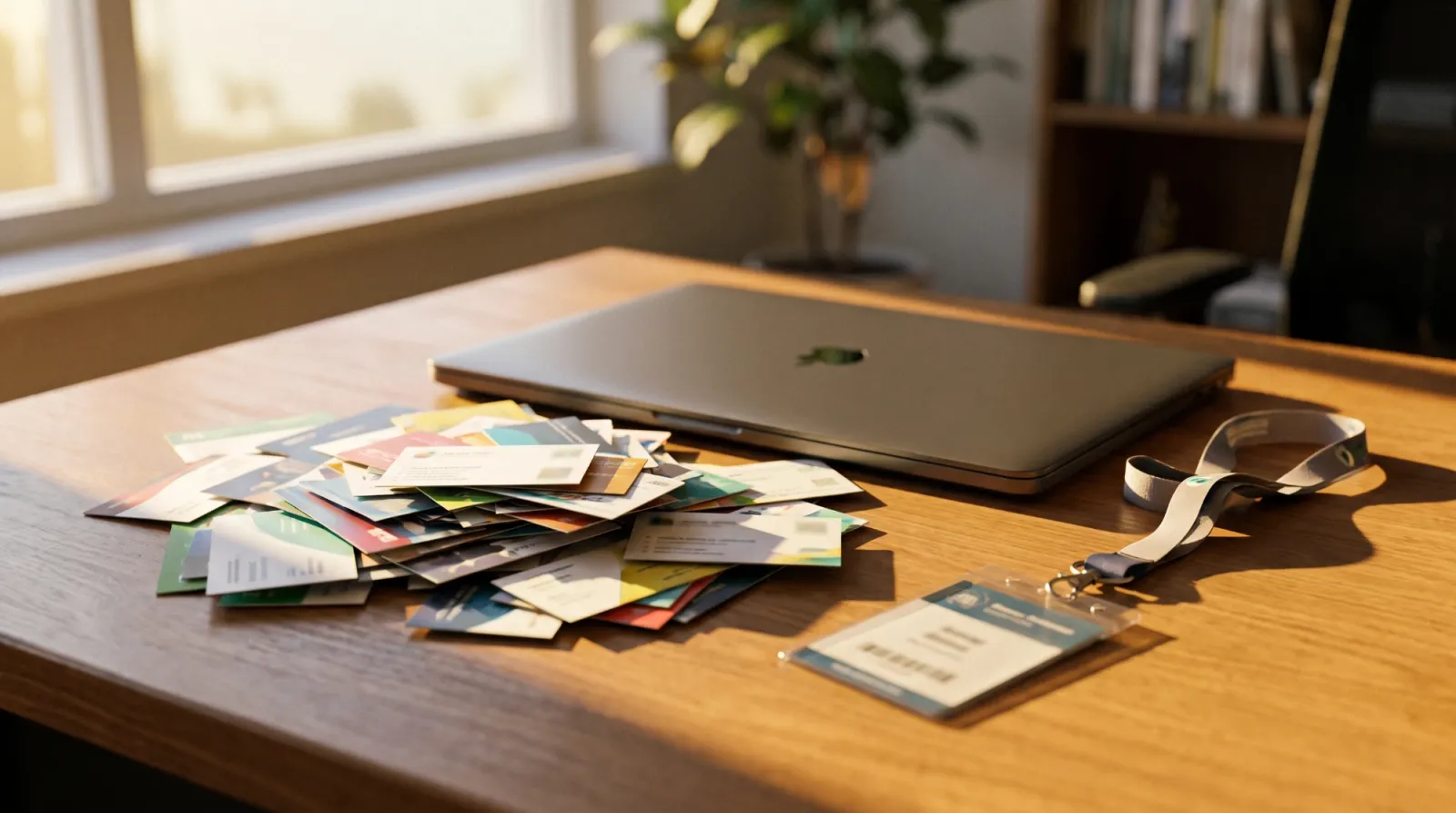
After every trade show, a stack of business cards lands on someone's desk. And industry surveys keep pointing at the same uncomfortable number: 70–80% of leads collected at exhibitions are never followed up. The problem isn't a shortage of cards. A business card tells you who you met — it says nothing about what you talked about.
What happens when all you have is a card
A week after the show, a sales rep picks up a card. Name and company are clear enough — but did this person ask for a quote? Which product were they interested in? Or did they just wander in? Nobody remembers. So everyone gets the same bulk email, and almost nobody replies.
For a trade show lead to become revenue, these need to be captured alongside the contact:
| What to record | Why it matters |
|---|---|
| Products of interest | Changes the subject line and first sentence of your follow-up |
| Lead temperature (hot/warm/cold) | Decides contact order and rep assignment |
| Deal size discussed | Pipeline forecasting and prioritization |
| Promised next steps | "Here's the quote we discussed" — trust starts here |
| Date, time and event | Per-event performance tracking, rebooking decisions |
Why nobody records anything at the booth
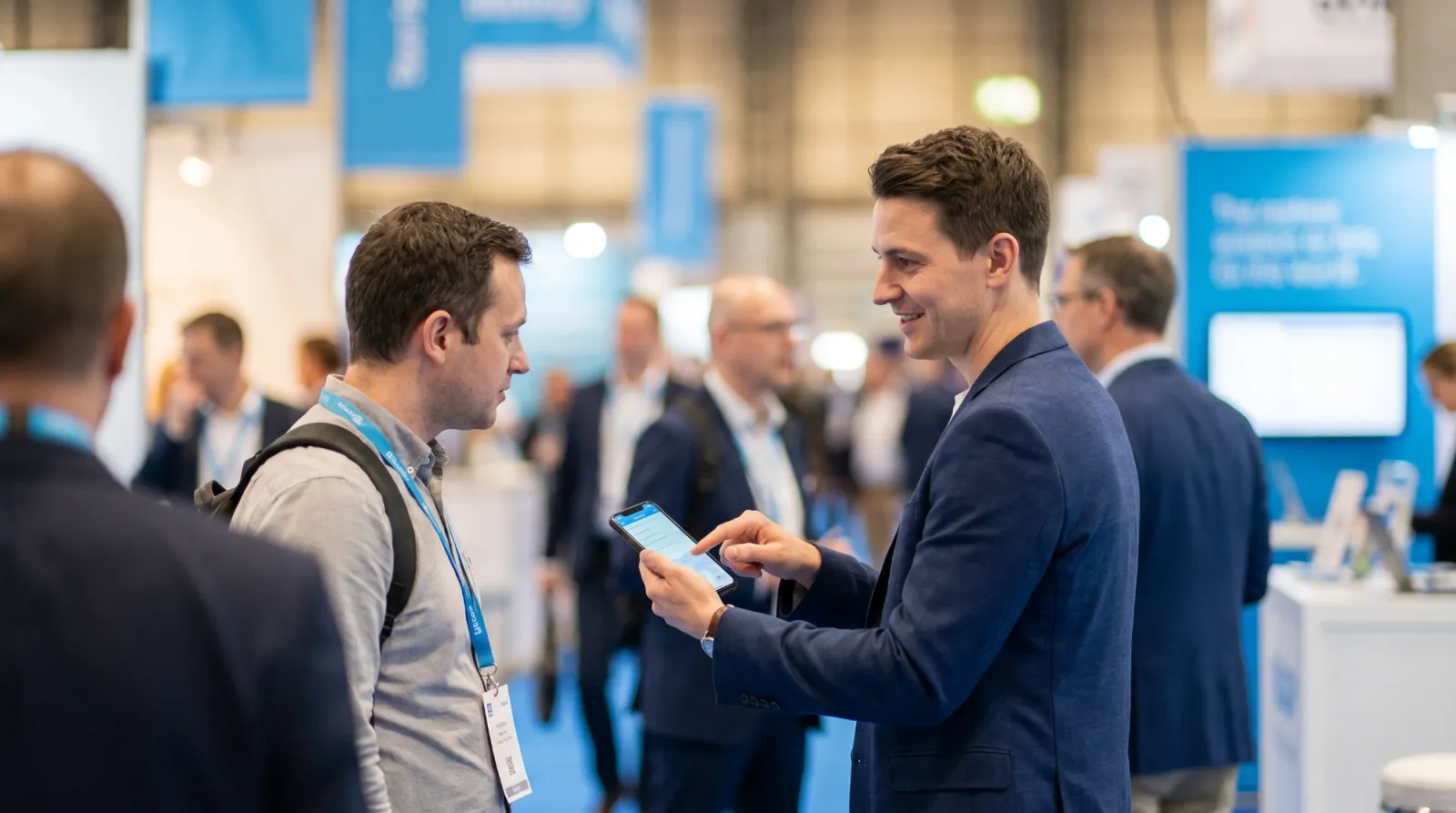
The reason is simple: a booth is a terrible environment for data entry.
- No time — at peak hours you get a few minutes per conversation. Nobody opens a laptop and types into a CRM.
- Typing is impractical — you're standing, on a phone, often working through an interpreter. Long notes don't happen.
- Spreadsheets get batched "after the show" — and by then, the context of each conversation has already evaporated.
So the fix is not "try harder to take notes." The fix is getting each record down to 30 seconds or less.
Five field-tested steps for trade show lead management
1. Turn inputs into pre-defined chips (buttons)
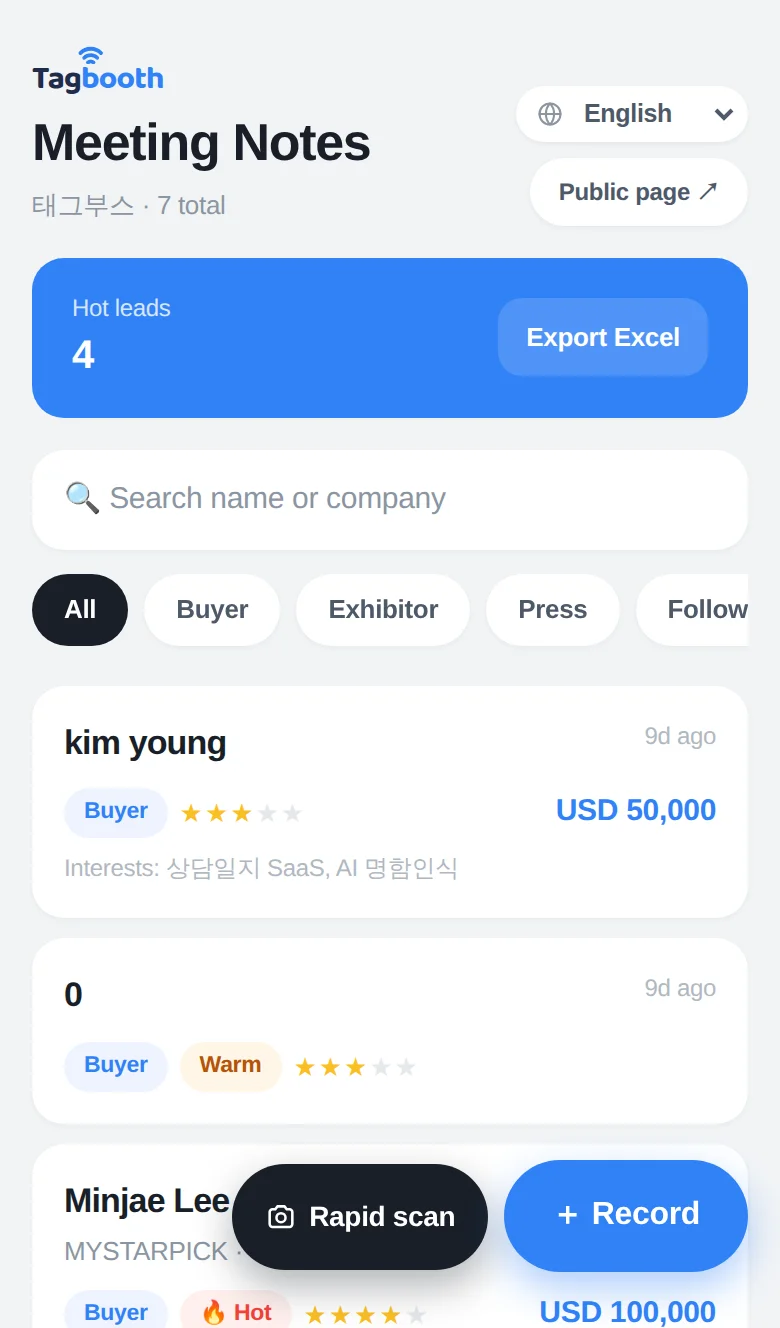
Define your product-interest list and follow-up actions before the event. On the floor, recording becomes a few taps; the only thing worth typing is the deal amount. This is exactly why TagBooth works this way — an interpreter or temp staffer should be able to use it with zero training.
2. Photograph the card, let AI do the typing
Shoot the business card the moment you receive it and let AI fill in name, company, title and contact details. Modern recognition handles mixed-language cards (e.g. Korean/English) reliably. Manual entry is where typos and missing fields come from.
3. Grade lead temperature immediately after the conversation
Hot (concrete budget and timeline), warm (interested, timeline unclear), cold (information gathering). This grading is only accurate within seconds of the conversation — after a day, every meeting blurs together.
4. First follow-up within 48 hours of the show closing
Follow-up performance is a function of speed. Start with hot leads, and attach whatever you promised during the conversation. The temperature from step 3 and the interests from step 1 write the email for you.
5. Report performance per event
Track conversation counts, temperature distribution, and total deal value per event. That data answers the questions that matter: do we rebook this show next year? Was the booth location and staffing right? If your participation is subsidized by a trade agency, the same data becomes your results report.
Change the tool, and the behavior follows
You can approximate these five steps with spreadsheets and a card box — but on a busy show floor, they only stick when the tool enforces the flow. TagBooth opens two screens from a single QR/NFC tag on your booth: a 30-second capture form for staff, and a company profile with brochures for visitors — while event reports build themselves as conversations accumulate. You can try the live demo with nothing to install, or see the full flow in How it works.
FAQ
Why do most trade show leads go nowhere?
Because business cards carry no conversation context — no product interest, no buying intent, no promised next steps. Once memories fade, personalized follow-up becomes impossible and leads end up in low-response bulk emails.
How soon should I follow up after a trade show?
Within 48 hours of the show closing, starting with hot leads. Every day that passes, the visitor remembers less of your conversation — and a competitor's follow-up may arrive first.
How do I classify lead temperature (hot/warm/cold)?
Hot means a concrete budget and purchase timeline; warm means clear interest but no defined timeline; cold means information gathering. Grade immediately after each conversation, and use the grade to set follow-up order and rep assignment.
What fields does a booth meeting record actually need?
Visitor contact details, products of interest, lead temperature, estimated deal size, promised next steps, and the date/event. With those six, you can run personalized follow-ups and per-event performance reports.