The Pop-up Store Prep Checklist — From Two Weeks Out to Teardown
The item most often missing from pop-up store prep isn't fixtures or stock — it's measurement design. A stage-by-stage checklist from two weeks before opening through teardown.
The item most often missing from a pop-up store prep list isn't fixtures or inventory — it's a plan for what to measure. Everyone handles the space and the stock, but without measurement design, weeks of operation end with nothing to show but photos. This guide walks through what to handle at each stage, from two weeks before opening through teardown, with special attention to the data-collection prep that teams most often skip.
Why measurement design belongs in the prep phase
Pop-ups are short. A permanent store can fix things next month; lose the first week of a three-week pop-up and a third of your run is gone. Yet measurement infrastructure — how you'll count visits, run a satisfaction survey, collect feedback — is nearly impossible to bolt on after opening, because the days right after opening are the busiest your team will have.
Flip it around and there's a bonus: deciding "what numbers will we use to call this a success?" during prep also sharpens every other decision. If the goal is testing reactions to a new product, the experience flow comes first. If it's brand awareness, photo spots and sharing mechanics come first.
D-14 to D-8: lock the goal and the measurement
These decisions belong two weeks out, before space prep takes over.
| To do | What it means |
|---|---|
| One primary goal | Pick one: product reaction / brand awareness / sales / customer data |
| Define success metrics | 2–3 metrics matched to the goal (e.g. survey responses, return-intent rate, activation participation) |
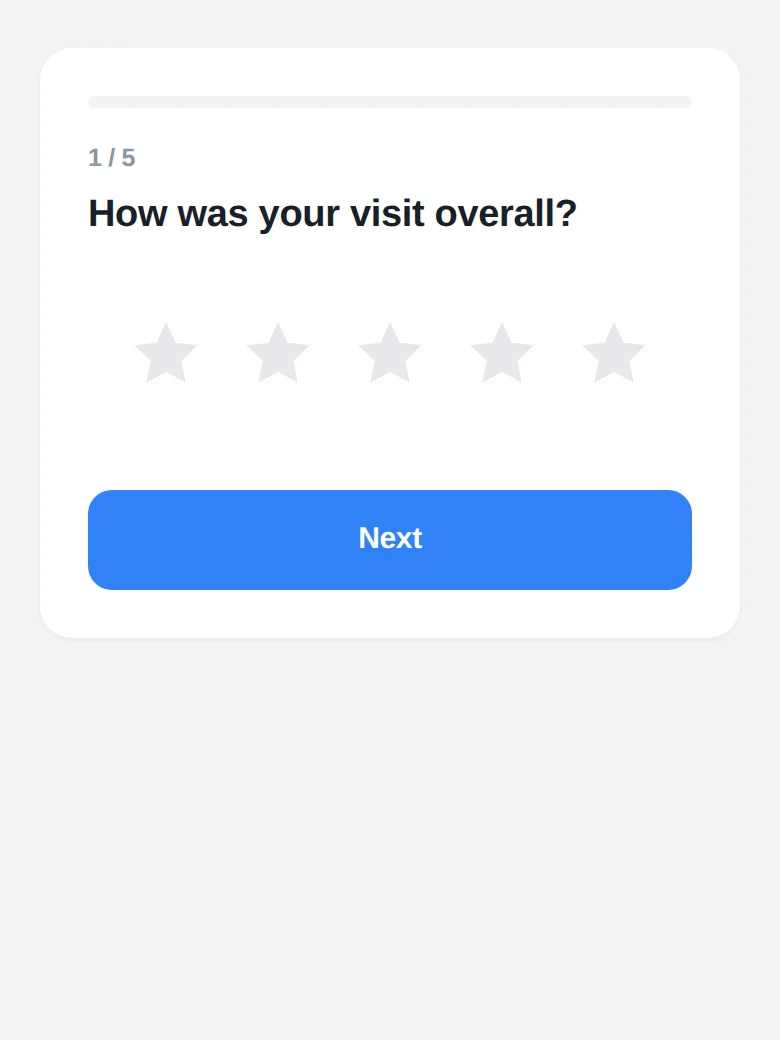
| Finalize survey questions | Star rating + 2–3 multiple choice + 1 open-ended, finishable in 30 seconds |
| Decide collection setup | QR stand locations (checkout, exit, photo zone), anonymity, incentive (prize draw etc.) |
| Draft the staffing plan | Who greets, who prompts the survey, peak-hour rotation |
Survey questions need to be final at this stage so they make it onto printed materials — QR stands and leaflets. For question design, see our pop-up satisfaction survey guide.
D-7 to D-1: space, flow, rehearsal
The final week is for testing the space and the team under real conditions.
- Walk the flow: entrance → experience/display → checkout → exit. Find the bottlenecks (in front of the photo zone, at checkout) before your visitors do.
- Install and test QR stands: once printed materials arrive, scan them with a real phone and confirm the survey opens. Glare and stand height break scanning in more spots than you'd expect.
- Brief the staff: distribute the role plan and standardize one line — "Before you go, would you mind a 30-second survey?" Response rates depend more on that one sentence than on stand placement.
- Plan for crowding: entry caps, queue location, how you'll communicate wait times. The number-one thing that drags down pop-up satisfaction isn't the product — it's congestion.
- Set up restock and escalation lines: selling out on the first weekend is a classic incident. Decide restock cadence and ownership now.
Opening week: a rehearsal and the real thing at once
In week one you run the store — and verify that your measurement setup actually works.
- Check that survey responses are accumulating in the first two days. If you're under ten a day, the problem is almost never the questions — check QR placement and whether staff are actually prompting.
- Read daily and hourly visit patterns and adjust staffing. Concentrating floor staff on weekend-afternoon peaks alone reduces queue complaints.
- If open-ended feedback repeats the same complaints — stockouts, unclear signage, waiting — fix them in week two. A short run isn't only a constraint; it means you can fix things fast enough for visitors to notice.
Final week and teardown: close in a way that leaves data behind
When the pop-up ends the space disappears. The data shouldn't.
- Check the bridge to what's next: confirm the survey completion screen and leaflets still route visitors to your brand channels (social, online store). The mechanics are in our repeat-visit guide.
- Schedule the wrap-up report: book time within a week of teardown to compile results. Context evaporates quickly once the team disperses.
- Archive the record: daily visit and response trends, top products, recurring feedback — the baseline for planning your next pop-up.
Making the prep lighter — TagBooth
The measurement items on this checklist — survey questions, QR collection, results compilation — are exactly what TagBooth's survey feature compresses. Pick a template or type one line about what you want to learn and AI drafts the questions; put up the printed QR and visitors respond anonymously in about 30 seconds, no app install.
As responses come in, per-question charts and daily trends build themselves, and an AI summary turns the patterns into plain-language suggestions. Results export to PDF, Excel, or CSV for head-office reporting. You can try the survey flow and see a sample results report in the demo without signing up, and the full flow is covered in how it works.
FAQ
How long does pop-up store prep take?
Excluding the lease and build-out, two weeks is a realistic minimum for operational prep. Measurement design — goal, metrics, survey questions — should be done around D-14, before print deadlines. Any later and it collides with QR stand and leaflet production.
How many goals and metrics should we set?
One primary goal and two or three metrics. Multiple goals blur every downstream decision about space, flow, and staffing — and stretch the survey until response rates collapse. Even if you want both sales and awareness, decide which comes first for this run.
Can't we just count visitors and skip the survey?
Visitor counts tell you how many came, not why they came or how it went. To make the next pop-up better you need reason data — what brought people in, how satisfied they were, what disappointed them — and a 30-second exit survey is the cheapest way to get it.
If problems show up in week one, is it okay to change things mid-run?
Changing things mid-run is the whole advantage of a pop-up. Recurring complaints about stockouts, signage, or waiting should be fixed in week two. One caution: keep the survey questions themselves stable so the full run stays comparable — change the operation, not the questionnaire.