AX Bridge Korea 2026 Field Report - Capturing Booth Meetings at a Conference-Style Event
We exhibited at the first Regional AX Bridge at COEX, Seoul, as one of 20 regional AI companies. Here is how booth traffic behaves at a session-driven event and how we turned the ten-minute breaks into usable lead records.
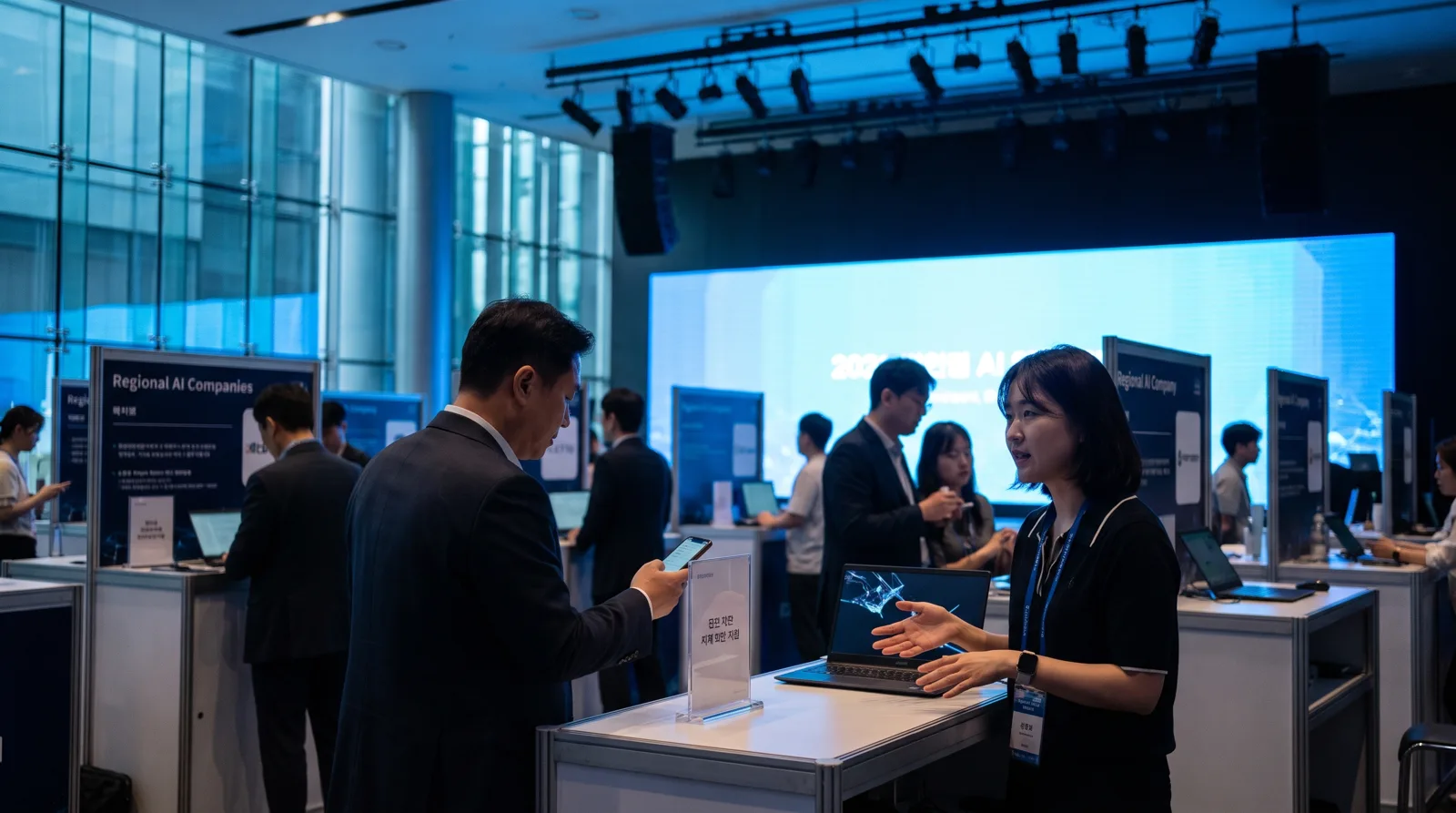
At a conference-style event, booth conversations pile into the ten minutes between sessions. On October 13 and 14, 2026, at THE PLATZ on the second floor of COEX in Seoul, Melaka, the company behind TagBooth, exhibited at "2026 Regional AX Bridge @ KOREA" as one of 20 selected regional AI companies. The rhythm was nothing like an industry trade show, and our meeting-capture routine had to change with it. This report lays out what we learned for any company planning a booth at a conference.
What Regional AX Bridge was
This was the event's first edition, hosted by Korea's Ministry of Science and ICT and organized by the National IT Industry Promotion Agency (NIPA). Its slogan, "Connecting Nodes, Creating Future", pointed at its purpose: bringing AI transformation (AX) from regions outside the capital area into one room. Press coverage put attendance at around 500 people from regional software agencies and companies.
The core of the event was an AX expert conference. Day one ran a global track with speakers from China, Japan, and Singapore alongside a regional track featuring POSCO DX, HD Hyundai Heavy Industries, and SK Energy. Day two opened with a special speech from NVIDIA's AI Technology Center and continued with speakers from Amorepacific, MyRealTrip, Musinsa, KT, and Samsung Medical Center. In the exhibition zone, 20 regional AI companies ran booths and business meetings, and 13 companies held recruitment interviews in the same space.
How a conference booth differs from a trade-show booth
At an industry trade show, visitors roam the floor all day. At a conference, they sit inside session rooms most of the time. People reach your booth only between sessions, around lunch, and right after the last talk.
That changes the nature of each conversation. Many people arrive at once, each exchange is short, and it gets cut off when the next session starts. In return, the quality is high. Regional agency officers, corporate AX leads, and founders of other exhibiting companies come with a clear purpose, so each conversation has a real chance of becoming a follow-up meeting.
So we reordered priorities. At a trade show, capturing meeting content matters. At a conference booth, capturing who came and whether they will return after the next session comes first.
What was on the booth
| Item | Where | Role |
|---|---|---|
| Card stand (A6) | Front corner of the table | Visitor-scanned QR that opens the company page and materials |
| Lanyard card | Worn by booth staff | Staff-scanned QR that opens the 30-second record screen |
| NFC cards | Inside the stand and the lanyard holder | Tap on Android, QR on iPhone |
| One laptop | On the table | Product demos only, never for recording |
The print design followed the event's navy and blue network key visual. When the kit matches the event's own look, visitors read it as part of the official setup and scan without hesitation.
How we used the ten-minute breaks
When a session ends, visitors come out together. We split those ten minutes into three parts.
- First three minutes - receive. Conversation only. When a business card is handed over, photograph it immediately and do not open the record screen.
- Middle five minutes - sort. As each conversation ends, open the record screen from the lanyard QR and tap only visitor type and lead temperature. Name and company are already filled from the card photo, so it takes about ten seconds.
- Last two minutes - book the return. For people who will come back, say "see you after the 3 p.m. session" and tap a "returning" chip on the record.
Once the next session starts and the booth goes quiet, fill in product-interest chips and follow-up chips. Splitting the record into two passes was the key: a ten-second record in the rush, a one-minute completion in the lull.
How the visitor page was used
Conference visitors have no free hands for paper. They walk straight into the next session. So instead of printed brochures, we uploaded the files to the company page that opens from the stand QR and told people to download from there. When a visitor leaves contact details on that page, it lands in the booth's lead list.
With global-track speakers and overseas attendees present, the English page got real use. The intro is translated automatically into the visitor's language and stored after the first generation, so nothing had to be prepared in advance.
What two days confirmed
The session timetable is the booth timetable. The night before, we wrote down every session end time and made sure two people were at the booth five minutes before each one. During sessions, one person can step away.
Return visits are where results come from. A first meeting lasts two minutes, but a visitor who said they would come back after a session returned and talked for ten or more. Waiting for "returning" visitors at the exact session end time was the most efficient use of our time.
A recruitment zone next door mixes up visitor types. Quite a few job seekers stopped by. Tapping a visitor type keeps them separate from investment and partnership leads when you review the list in the evening.
The hot leads came from people who returned after a session. The counts are internal, but the near-perfect overlap between "came back" and "hot" should hold at other conference booths too.
Conference booth checklist
| Item | Detail |
|---|---|
| Get the session timetable | Staff the booth around session end times |
| Design a two-pass record | 10 seconds in the rush (type, temperature), 1 minute in the lull (chips, memo) |
| Photograph cards immediately | Shoot during the conversation, enter later |
| Use a "returning" chip | Record the promise to come back |
| Deliver materials via the QR page | Downloads instead of paper, plus contact capture |
| Separate visitor types | Keep job seekers and students apart from business leads |
How TagBooth fits in
The tool we used is TagBooth. One tap on the lanyard opens the 30-second record screen, a business card photo fills in name, company, and contact details, and visitor type and lead temperature are single chips. The visitor page opened from the stand shows the intro and brochures in the visitor's language and collects contact details as leads. After the event, the daily and hourly meeting chart shows a spike at every session end time. The screens are in the demo, and the full flow is described in how it works.
FAQ
How many staff does a conference booth need?
Two at every session end time, one to talk and one to record and arrange return visits. During sessions one person is enough, and that is the time to complete the morning's records.
Is a two-minute conversation worth recording?
Yes. What you keep from a two-minute meeting is not the content but who the person is and whether they will return. A card photo plus a temperature chip takes ten seconds, and those ten seconds become your follow-up list after the show.
Can we skip printed brochures entirely?
At a conference, a QR-opened materials page was enough. Visitors head straight into the next session and rarely carry paper, and because they can leave contact details on the page, downloads are traceable in a way paper never is.
How do you handle job seekers and students?
Tap the visitor type and move on. Sorting by type in the evening leaves a clean list of business leads, and recruitment inquiries can be handed to whoever handles hiring.